Shockwave Therapy
Shockwave therapy uses acoustic energy to support recovery and rehabilitation. It is not an electrical treatment, and it is not a guaranteed fix for every condition. Instead, it may be used alongside movement-based care to help improve symptoms and support functional goals.
When you visit, the focus is on the activities that matter most to you — not just the painful spot. Your provider will assess your condition, explain how acoustic support fits into your care plan, and discuss what you can realistically expect from treatment.
A personalized approach to your care
- Condition and activity tolerance assessed
- Acoustic-wave approach explained
- Role alongside rehabilitation discussed
- Response guides reassessment

Understanding
Shockwave Therapy
Shockwave therapy applies acoustic energy through a handpiece to a selected area. It differs from electrical stimulation, and different acoustic-wave approaches should not be assumed equivalent. Evidence and suitability vary by diagnosis, so the area needs assessment before treatment is chosen.
A procedure alone may not address strength, movement habits, or load tolerance. Exercise and education may remain important parts of care. Temporary discomfort, bruising, swelling, or soreness can occur; medicines, bleeding risks, pregnancy, and the proposed treatment area need review before consent.
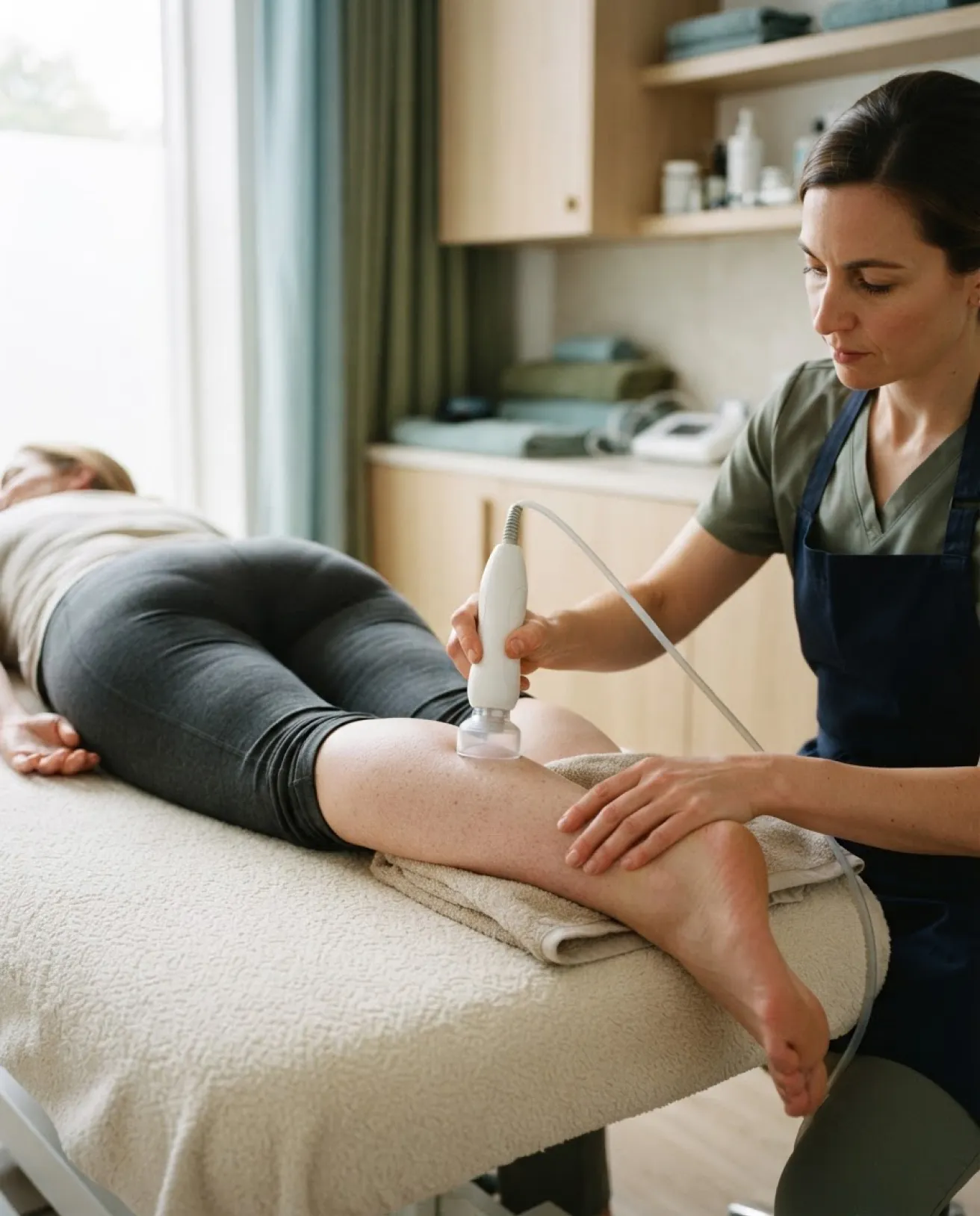
A personalized approach to Shockwave Therapy
A Treatment Option Within a Movement Plan
A useful plan connects shockwave therapy to the activities that matter most to you. Your provider will explain how acoustic support fits into your care plan, how rehabilitation will be managed between visits, and what you can realistically expect from treatment.
01 — Consultation
Describe your symptoms, how they started, any changes in activity, prior treatment, and the tasks you want to perform more comfortably.
02 — Evaluation
Assess the area and diagnosis, review medical risks, and discuss evidence for shockwave in your condition.
03 — Personalized Plan
If suitable, clarify the treatment area, expected sensations, risks, alternatives, and its place alongside exercise or other care.
04 — Ongoing Care
Review symptoms and function, adjust loading advice, and reconsider treatment if response is limited or symptoms change.
A Considered Approach to Acoustic-Wave Care
At Basis, ask why shockwave is being proposed for your condition and what role it plays in the broader plan. Discuss the proposed acoustic-wave approach and how symptoms and function would be reviewed; a tissue-healing outcome is not guaranteed. Increasing pain, new weakness, or other changing symptoms should prompt reassessment rather than automatic repeat treatment.

What to expect
Before your appointment
Share imaging or diagnoses, medicines, bleeding risks, pregnancy status, recent procedures, and changes in symptoms. Wear clothing that allows assessment of the relevant area.
During your visit
Your provider confirms the area and consent before applying an acoustic-wave handpiece if appropriate. Report discomfort so tolerance can be assessed rather than forcing treatment.
Estimated visit: 15–30 min.
Confirm appointment details when booking.
After your visit
Follow the agreed activity and rehabilitation guidance. Ask what soreness is expected and report worsening pain, unusual swelling, or other concerning changes.
Frequently Asked Questions
No; the service described uses acoustic waves. Ask which approach is proposed and how it differs from other modalities you have tried.
No; suitability and evidence vary by diagnosis. A painful area needs assessment rather than an assumption that shockwave is appropriate.
Exercise or load management may be an important part of care. A procedure should not automatically replace rehabilitation that addresses your function.
Discomfort can occur and tolerance varies. Tell the provider what you feel so the approach can be assessed and adjusted as appropriate.
Temporary soreness, bruising, or swelling may occur. Medicines, bleeding risks, pregnancy, and the treatment area can change suitability and require review.
That depends on the condition, treatment, and your symptoms. Ask for specific loading guidance rather than assuming either complete rest or unrestricted training.
Any proposed series should be linked to a rationale and reassessed according to response.
Estimated visit: 15–30 min. Confirm appointment details when booking. Ask whether the initial musculoskeletal assessment needs separate time and how activity guidance will be reviewed between visits.

It’s time to get back to basis.
Talk with a provider about shockwave therapy and how it might fit your musculoskeletal care plan.